From the Fairway to the Drawing Room: How Curated Member Clubs Became America's Most Powerful Business Arenas
From the Fairway to the Drawing Room: How Curated Member Clubs Became America's Most Powerful Business Arenas
For decades, the golf course served as America's unofficial boardroom. Deals were floated on the back nine, partnerships were cemented over a shared handicap, and the unspoken rule was simple: if you wanted to reach the right people, you needed to be seen in the right places — preferably somewhere with a caddy and a dress code. That era, while not entirely over, is giving way to something more deliberate, more diverse, and arguably more powerful.
Across the country, private membership clubs — not the dusty, old-guard variety of decades past, but sophisticated, purpose-built communities for high-achieving professionals — are quietly becoming the defining venues of American deal-making culture. The shift is not merely aesthetic. It reflects a fundamental recalibration in how influence is cultivated, how trust is built, and what the most ambitious professionals consider the essential ingredient for lasting professional success: the right room.
The Decline of the Accidental Encounter
The golf course operated on a logic of proximity. Spend enough weekends at the right club, and eventually you would find yourself in a cart with someone worth knowing. It was serendipity dressed in khakis. The boardroom dinner, similarly, relied on institutional hierarchy — you were invited because of your title, your firm, or your employer's prestige.
What neither venue offered was intentionality. And in an era defined by information overload, fractured attention, and an almost allergic resistance to wasted time among high-performing professionals, intentionality has become the ultimate luxury.
Private membership clubs — particularly those built around curated professional communities — solve this problem by design. Membership is selective not merely because exclusivity is appealing, but because the value of a community is directly proportional to the quality and relevance of its members. When every person in the room has been vetted, selected, and oriented toward shared standards of excellence, the accidental encounter is replaced by something far more valuable: the inevitable connection.
What the Data Suggests About Relationship-Driven Business
The cultural pivot toward membership-based networking is not happening in a vacuum. Research consistently demonstrates that high-value business relationships — the kind that generate referrals, partnerships, and long-term revenue — are built through repeated, low-stakes interactions over time, not through formal pitches or transactional introductions.
A survey conducted by Harvard Business Review found that executives who reported strong professional networks were significantly more likely to receive high-impact opportunities, promotions, and business referrals than those who relied primarily on digital outreach or conference attendance. Yet the same research noted that most professionals feel their networks are either too narrow or insufficiently maintained.
Membership clubs address this gap structurally. Regular events, shared dining experiences, curated introductions, and communal spaces create the conditions for repeated, meaningful interaction — the very foundation upon which trust, and ultimately business, is built. The golf course required a shared hobby. The modern membership club requires only ambition and alignment.
The Architecture of Influence
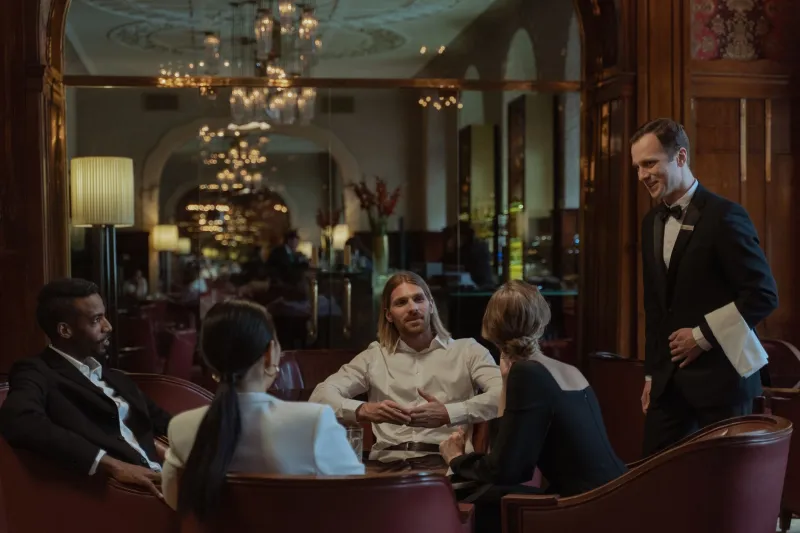
Walk into the right private club on any given Tuesday evening in a major American city, and you will find something the golf course never quite managed to deliver: genuine cross-sector convergence. Technology founders sharing dinner with entertainment executives. Real estate developers in conversation with policy advisors. Creative directors seated alongside venture capitalists.
This interdisciplinary density is not accidental — it is engineered. The most effective membership communities understand that the most transformative professional relationships are often the least obvious ones. A media executive and a biotech founder may have little in common on paper, yet the introduction facilitated in the right environment can catalyze something neither could have anticipated.
This is the architecture of influence at its most sophisticated. It is not about who you already know. It is about who you are positioned to meet, and whether the environment in which you meet them inspires the kind of openness and candor that transactional settings rarely permit.
Atmosphere as a Strategic Asset
Ambitious professionals have long understood that credentials open doors. What is less frequently discussed is how atmosphere determines what happens once you are inside.
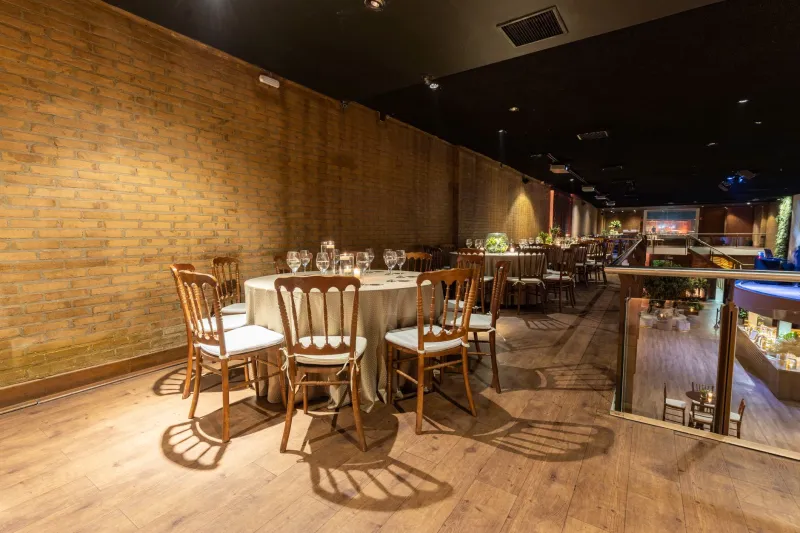
The environment in which a conversation takes place shapes its quality, its depth, and its outcome. A rushed coffee meeting between back-to-back calls produces a very different quality of exchange than an unhurried dinner in a beautifully appointed private dining room, surrounded by peers who share your standards and your appetite for what is possible.
Leading membership clubs invest heavily in their physical and experiential environments precisely because they understand this dynamic. Every element — from the curation of the guest list to the caliber of the programming, from the quality of the table settings to the thoughtfulness of the introductions — communicates a single, consistent message: this is a place where serious people come to do serious things, and to enjoy the process of doing them.
For members of JBO Club and communities like it, this is not a peripheral concern. It is central to the value proposition. The right atmosphere does not merely make an evening pleasant — it makes the conversations that happen within it more honest, more generative, and more likely to translate into lasting professional relationships.
Redefining the Power Lunch for a New Generation
The term "power lunch" was coined in the 1970s to describe the midday meals at New York's Four Seasons restaurant, where deal-makers gathered under the implicit understanding that the real business happened between the appetizer and the entrée. The concept endured for decades because it captured something true: that business is, at its core, a human endeavor, and humans do their best connecting over a shared table.
What has changed is not the underlying truth, but the venue and the mechanism. Today's most consequential professional gatherings are less likely to happen at a restaurant where anyone with a reservation can observe, and more likely to occur within the structured privacy of a curated member community — where the guest list is known, the atmosphere is controlled, and the shared context of membership creates an immediate foundation of trust.
For professionals who understand that access and atmosphere are just as consequential as credentials, this shift represents not a departure from the traditions of American deal-making culture, but their natural evolution. The fairway had its moment. The drawing room — curated, intentional, and built for elite minds — is having its own.
The Membership Imperative
There is a growing recognition among America's most forward-thinking professionals that the communities you belong to are as defining as the companies you build or the titles you hold. Membership in the right club is not a social indulgence — it is a strategic investment in the quality of your professional ecosystem.
For those who have not yet considered what room they belong in, the question is worth asking with some urgency. Because in a landscape where the most valuable currency is trust, and trust is built through proximity and repetition, the membership you hold may ultimately determine the trajectory of everything that follows.